Business Financing Options
What do you mean by business financing options?
Business financing options refer to the various ways in which businesses can secure funding to support their operations and growth. These options can include traditional bank loans, lines of credit, venture capital, crowdfunding, and more. Choosing the right financing option for your business is crucial to its success, as it can impact your cash flow, growth potential, and overall financial health.
How can businesses explore their financing options?
Businesses can explore their financing options by assessing their current financial situation, determining their funding needs, and researching the different types of financing available to them. It’s important to consider factors such as interest rates, repayment terms, and the impact on your business’s cash flow before making a decision. Consulting with a financial advisor or business consultant can also help you navigate the complex world of business financing.
What is known about the various financing options available to businesses?
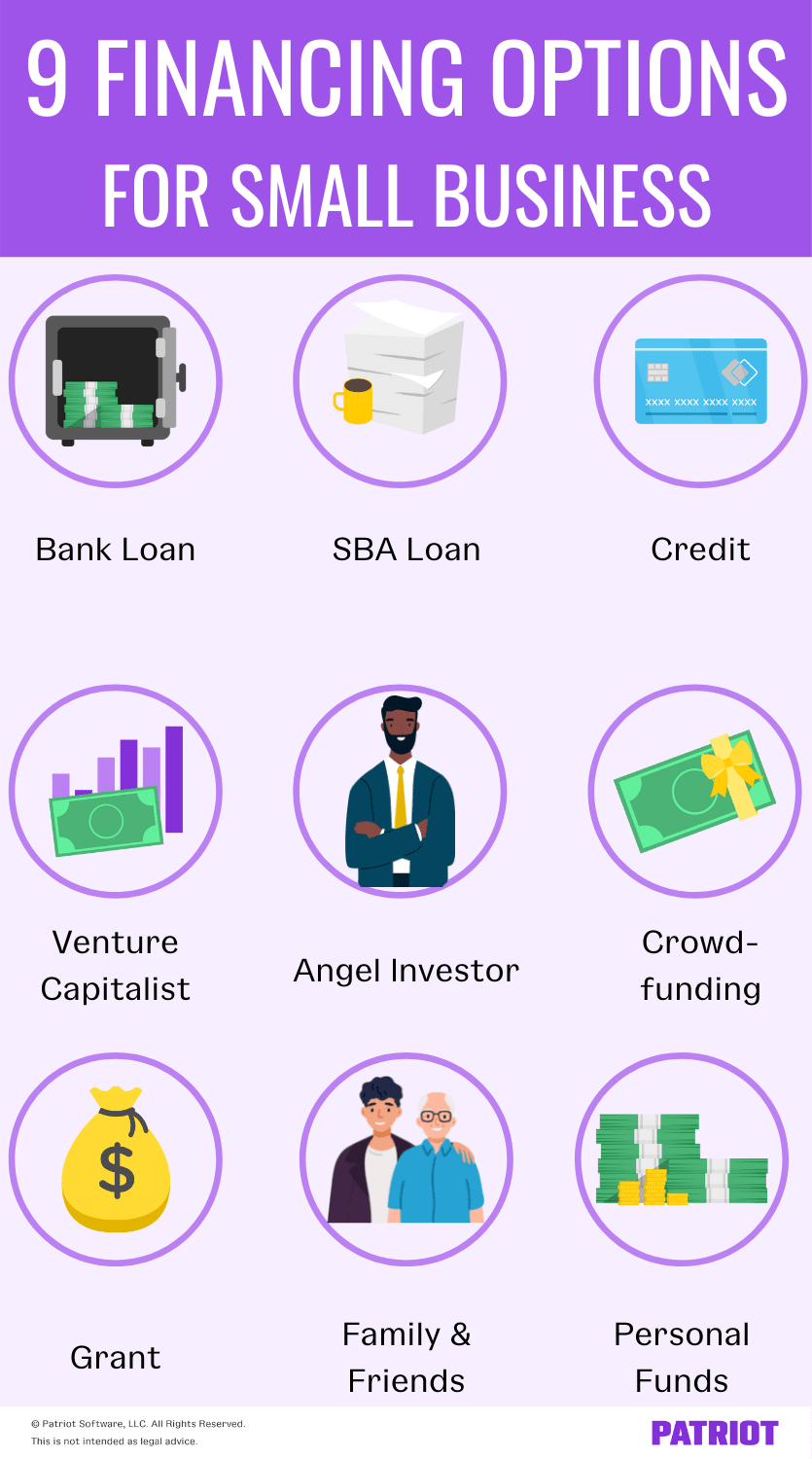
Image Source: patriotsoftware.com
There are several financing options available to businesses, each with its own set of advantages and disadvantages. Traditional bank loans are a common choice for many businesses, as they offer competitive interest rates and flexible repayment terms. Lines of credit are another popular option, providing businesses with access to funds on an as-needed basis. Venture capital and angel investors are ideal for startups and high-growth companies looking for significant funding. Crowdfunding platforms allow businesses to raise funds from a large number of investors online. Each financing option has its own requirements and considerations, so it’s essential to research and compare them carefully.
What are some solutions for businesses seeking financing?
For businesses seeking financing, there are several solutions to consider. One option is to work with a financial institution, such as a bank or credit union, to secure a loan or line of credit. Another solution is to explore alternative financing options, such as peer-to-peer lending platforms or invoice financing. Businesses can also consider seeking funding from investors, either through venture capital firms, angel investors, or crowdfunding platforms. It’s essential to evaluate your business’s financial needs and goals carefully to determine the best financing solution for your specific situation.
Information on business financing options
When exploring business financing options, it’s crucial to consider factors such as the amount of funding needed, the purpose of the funds, and the repayment terms that work best for your business. Traditional bank loans are a reliable choice for businesses with a strong credit history and stable cash flow, while lines of credit offer flexibility and quick access to funds. Venture capital and angel investors are ideal for businesses looking to scale quickly and attract significant investment. Crowdfunding can be a viable option for businesses looking to raise funds from a large pool of investors online. By carefully evaluating your financing needs and researching the various options available, you can make an informed decision that supports your business’s growth and success.
Conclusion
In conclusion, business financing options are essential for businesses looking to support their operations and achieve their growth goals. By exploring the various financing options available, businesses can find the right solution that meets their funding needs and aligns with their financial objectives. Whether you choose a traditional bank loan, line of credit, venture capital, or crowdfunding, it’s crucial to carefully evaluate the terms and requirements of each option to make the best decision for your business. By working with financial experts and conducting thorough research, you can secure the funding you need to take your business to the next level.
FAQs
1. What are the most common business financing options?
The most common business financing options include traditional bank loans, lines of credit, venture capital, angel investors, and crowdfunding.
2. How do I determine the right financing option for my business?
To determine the right financing option for your business, assess your financial needs, research the various options available, and consider factors such as interest rates, repayment terms, and impact on cash flow.
3. What is the difference between debt and equity financing?
Debt financing involves borrowing money that must be repaid with interest, while equity financing involves selling shares of ownership in your business in exchange for funding.
4. Are there government programs available for business financing?
Yes, there are government programs available to help businesses secure financing, such as Small Business Administration (SBA) loans and grants.
5. How can I improve my chances of securing financing for my business?
To improve your chances of securing financing for your business, maintain a strong credit history, prepare a detailed business plan, and seek advice from financial experts or business consultants.
Business financing options